
Advertisement
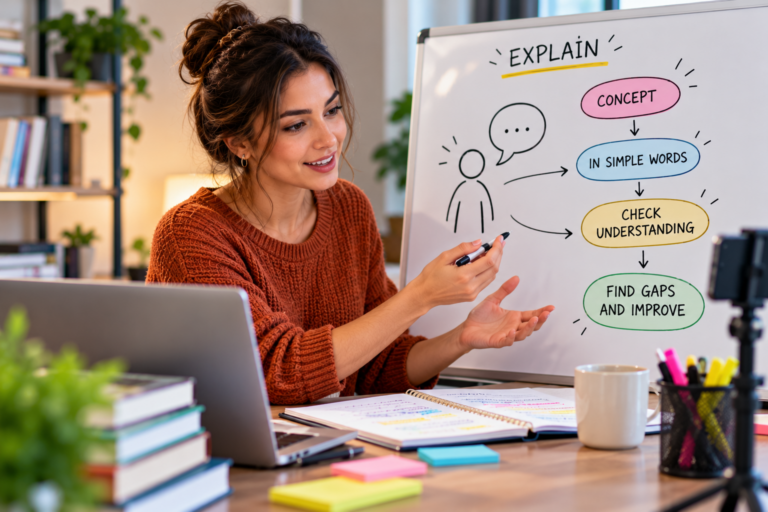
Did you know that people remember information they create themselves up to 40% better than information they simply read? This intriguing phenomenon is known as the generation effect. It highlights how actively engaging with material can significantly enhance memory retention.
Research by Slamecka and Graf in 1978 demonstrated this through word-pair experiments. Participants who generated missing words recalled them more successfully than those who merely read complete pairs. This finding is crucial for students and anyone looking to improve their learning techniques.
A meta-analysis of 86 studies further supports this, revealing a reliable memory advantage for generated information. Understanding this effect can transform how we approach learning and studying, making it a vital topic for educators and learners alike.
Introduction: Understanding the Power of the Generation Effect
Individuals often recall information they actively engage with far better than content they passively consume. Traditional learning often relies on methods like textbooks, lectures, and videos. These approaches can create a sense of familiarity but often fail to ensure reliable long-term recall.
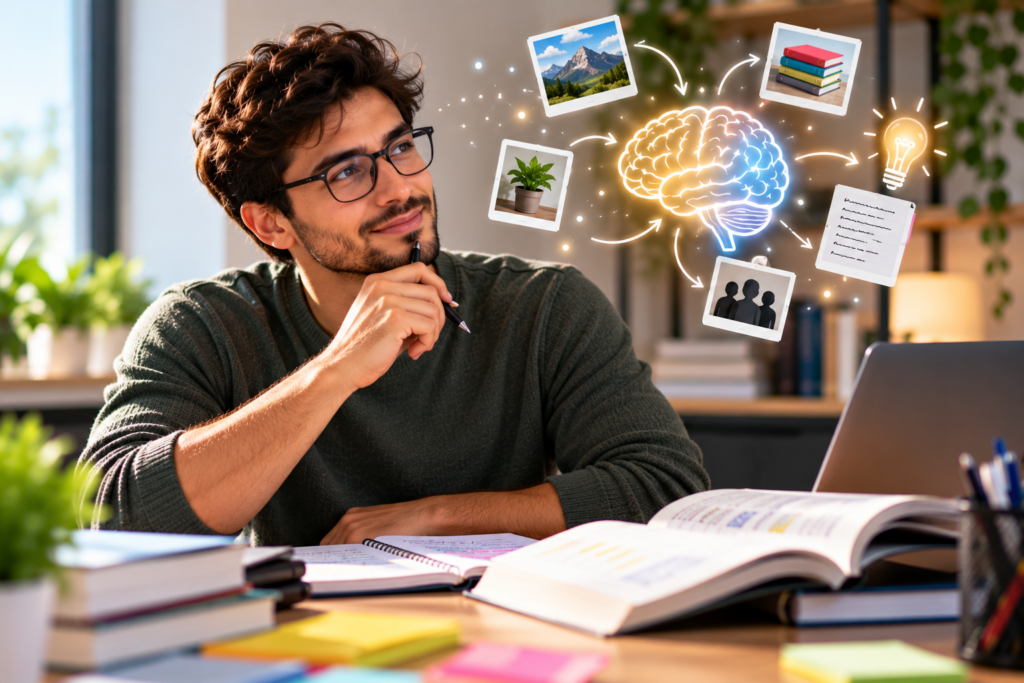
The generation effect demonstrates that students remember information more effectively when they produce, reconstruct, explain, or retrieve it themselves. This active involvement leads to deeper understanding and better retention.
Consider these points about the impact of active learning:
- Active participation fosters a personal connection to the material.
- Generating content enhances critical thinking skills.
- It promotes a more engaging learning environment.
By embracing the principles of the generation effect, learners can transform their study habits. This shift not only boosts memory but also enriches overall knowledge.
| Learning Method | Memory Retention | Engagement Level |
|---|---|---|
| Passive Reading | Low | Low |
| Active Generation | High | High |
Understanding the generation effect can empower students and educators alike. By focusing on active learning techniques, they can improve both memory and comprehension.
What Is the Generation Effect?
People tend to recall information they generate much better than material they passively absorb. This intriguing phenomenon is known as the generation effect. It highlights the importance of active participation in the learning process.
Defining the Generation Effect
The generation effect occurs when individuals remember material better after producing it themselves. This is in contrast to simply receiving the same material passively. Engaging with information actively creates stronger memory traces.
Examples Illustrating the Phenomenon
Consider these examples that showcase the generation effect:
- Completing the word “F-L-O-W-E-R” by filling in the missing letters.
- Generating a synonym for “happy” that starts with “J.”
- Answering a factual question before seeing the correct response.
- Solving an anagram to form a specific word.
- Creating a definition or explaining a concept without referring to the source.
Difference Between Generation and Passive Reading
Active generation involves personal engagement with the material. This method contrasts sharply with passive reading, where information is simply absorbed without interaction. As a result, students who actively generate answers tend to retain information better.
“Active involvement leads to deeper understanding and better retention.”
Historical Background and Key Research Studies
Research has shown that engaging with information actively leads to better memory retention than simply reading it. This insight into the generation effect stems from foundational studies that have shaped our understanding of memory.
Slamecka and Graf’s Seminal 1978 Study
In 1978, Norman Slamecka and Peter Graf conducted a pivotal study. They presented participants with word pairs. Some individuals read complete pairs, such as “rapid-fast.” Others had to generate the second word from a cue, like “rapid-f___.” The results were striking. Those who generated the words remembered them better in later tests.
Subsequent Research Confirming the Effect
Following Slamecka and Graf’s work, numerous studies have confirmed the significance of this phenomenon. Research has consistently shown that active engagement with material enhances memory retention. This reinforces the idea that generating information leads to more robust memory traces.
Meta-Analyses and Effect Size Insights
A comprehensive meta-analysis by Bertsch, Pesta, Wiscott, and McDaniel in 2007 reviewed 86 studies on this topic. They reported an average effect size of d = 0.40, indicating a substantial memory advantage for generated information. This further solidifies the importance of the generation effect in educational contexts.
Why the Generation Effect Improves Memory: Underlying Mechanisms
The way we engage with information can dramatically influence how well we remember it. Understanding the mechanisms behind the generation effect reveals why active participation enhances memory retention.
Elaboration Hypothesis: Creating Richer Memory Traces
The elaboration hypothesis suggests that when learners generate information, they create richer memory traces. This happens because they connect new material with existing knowledge. As a result, the information becomes more meaningful and easier to recall later.
Effortful Processing and Memory Distinctiveness
Effortful processing is crucial for making memories distinctive. When students invest effort into generating answers, they form unique associations with the material. This distinctive processing helps in differentiating the information from other memories, making it easier to retrieve.
Retrieval Practice as a Form of Generation
Retrieval practice overlaps significantly with the generation effect. Actively recalling information reinforces memory pathways. This practice not only aids in memory retention but also boosts understanding by requiring learners to organize and articulate their thoughts.
Metacognition and Immediate Feedback
Metacognition plays a vital role in the learning process. When learners engage in generation, they often receive immediate feedback on their answers. This feedback helps them identify errors and strengthen their understanding, leading to better memory retention.
Neuroscience Insights into Generation and Memory
Exploring the neural mechanisms behind memory can help us appreciate the value of active learning. Cognitive research reveals that the process of generating information actively strengthens our neural pathways. This enhancement plays a significant role in how we encode and retrieve knowledge.
How Active Generation Strengthens Neural Pathways
When individuals engage in active generation, they stimulate specific brain areas associated with memory. This stimulation promotes the formation of new neural connections. As a result, the brain becomes more adept at recalling information later. The more we practice generating answers, the stronger these pathways become.
Deep Semantic Processing and Its Brain Correlates
Deep semantic processing occurs when we connect new information to existing knowledge. This approach aligns with Craik and Lockhart’s levels-of-processing framework. Their research suggests that meaning-based processing leads to stronger memory retention compared to surface-level attention. When we generate information, we naturally engage in deeper processing.
Distinctiveness and Retrieval Route Enhancement
Active generation not only strengthens memory traces but also enhances the distinctiveness of the information. Unique encoding helps differentiate new knowledge from existing memories. This distinctiveness creates more effective retrieval routes, making it easier to access information when needed. By generating answers, learners reinforce these routes, which supports later recall.
| Neuroscience Aspect | Impact on Memory | Example |
|---|---|---|
| Neural Pathway Strengthening | Improved recall ability | Practicing retrieval of vocabulary words |
| Deep Semantic Processing | Enhanced understanding and retention | Connecting concepts in a science class |
| Distinctiveness | Easier information retrieval | Creating unique mnemonics for facts |
Practical Uses of the Generation Effect for Students
Active engagement in learning tasks significantly boosts memory retention. Students can harness the generation effect through various practical techniques. These activities not only enhance recall but also deepen understanding of the material.
Self-Testing and Retrieval Practice Techniques
One effective way to utilize the generation effect is through self-testing. Students can close their books and attempt to recall key ideas from memory. This practice reinforces learning and helps identify areas that need further review.
Summarizing and Paraphrasing in Your Own Words
Writing summaries from memory is another powerful technique. By paraphrasing information, students engage actively with the content. This process helps solidify their understanding and enhances memory retention.
Elaborative Interrogation: Asking “Why” and “How”
Encouraging students to ask questions like “why” and “how” deepens their engagement. This method promotes critical thinking and allows learners to connect new information with prior knowledge, further strengthening memory.
Concept Mapping and Teaching Others
Creating concept maps can visually organize information, making it easier to remember. Additionally, teaching peers about a topic reinforces the learner’s understanding and retention of the material.
Generating Examples and Active Note-Taking
Students should practice generating examples related to the material. This not only makes learning more relatable but also enhances retention. Active note-taking, where students paraphrase and summarize as they learn, is equally beneficial.
Problem-Solving Before Solution Exposure
Finally, attempting to solve problems before seeing the solutions can be a game-changer. This approach encourages students to apply their knowledge actively, leading to better retention and understanding.
These activities are most effective when learners check their work and receive accurate feedback. By integrating these techniques into their study routines, students can significantly enhance their memory and learning outcomes.
How Educators Can Leverage the Generation Effect in Classrooms
Educators can play a crucial role in enhancing memory retention by leveraging the principles of active engagement. By incorporating strategies that require students to generate answers and explanations, teachers can create a more effective learning environment. Here are several ways to implement these techniques in the classroom.
Designing Assignments That Require Active Generation
Assignments should encourage students to actively generate information. Open-ended tasks, such as essays or creative projects, allow students to express their understanding. This approach fosters deeper connections with the material.
Frequent, Low-Stakes Quizzing and Retrieval Practice
Regular, low-stakes quizzes can reinforce learning. These quizzes prompt students to recall information actively, enhancing their memory. Frequent practice helps solidify knowledge and prepares students for more significant assessments.
Implementing Think-Pair-Share and Collaborative Generation
Think-pair-share activities promote collaboration. Students first think about a question, then discuss their thoughts with a partner. This method encourages active participation and helps clarify understanding through dialogue.
Flipped Classrooms and Socratic Questioning
In a flipped classroom, students learn new content at home and engage in active discussions in class. Socratic questioning further stimulates critical thinking. These methods encourage students to explore ideas deeply and articulate their thoughts.
Group Work for Synthesis and Original Creation
Group projects that require synthesis of information can enhance learning. Students collaborate to create presentations or debates, allowing them to generate new insights. This collaborative generation of knowledge promotes retention and understanding.
By integrating these activities into their teaching practices, educators can significantly improve students’ memory and understanding of the material. Feedback on these tasks is essential, guiding students toward mastery of the subject matter.
Subject-Specific Applications of the Generation Effect
Creating content allows learners to connect with the material in a more meaningful way. This principle can be applied across various subjects, enhancing understanding and retention. Here are some specific applications in different academic areas:
Mathematics: Problem Generation and Procedural Learning
In mathematics, students can enhance their learning by generating their own word problems. They can also explore multiple solution strategies and explain the procedures involved. This active engagement helps solidify their understanding of mathematical concepts.
Science: Hypothesis Generation and Diagram Construction
In science classes, learners can practice forming hypotheses based on observations. They can predict results, complete diagrams, and explain the phenomena they observe. This hands-on approach fosters deeper comprehension of scientific principles.
Literacy and Language Arts: Vocabulary and Writing Tasks
In literacy, students can generate vocabulary completions and examples of literary devices. Writing summaries and crafting arguments based on texts are also effective activities. These tasks promote active engagement with language and enhance memory retention.
History and Social Studies: Timelines and Causal Explanations
In history, students can construct timelines to visualize events and their connections. They can also create causal explanations, linking historical events and understanding their significance. This method encourages critical thinking and deeper learning.
| Subject | Activity | Benefits |
|---|---|---|
| Mathematics | Generate word problems | Enhances problem-solving skills |
| Science | Form hypotheses | Encourages critical thinking |
| Literacy | Create vocabulary examples | Improves language skills |
| History | Construct timelines | Facilitates understanding of events |
Combining Generation with Other Effective Learning Strategies
When students merge various learning methods, they often experience a boost in memory performance. The combination of the generation effect with other strategies can create a powerful learning experience. This section explores how integrating retrieval practice, spaced practice, interleaving, and elaboration can enhance memory retention.
Generation Plus Retrieval Practice
Retrieval practice is a technique where learners actively recall information. When combined with the generation effect, it significantly improves memory. For instance, a student might explain a concept today and then retrieve that information tomorrow. This dual approach strengthens memory pathways and enhances long-term retention.
Incorporating Spaced Practice and Interleaving
Spaced practice involves reviewing material over increasing intervals. Interleaving, on the other hand, mixes different topics during study sessions. Together, these strategies support durable learning. By spacing out generation opportunities, students reinforce their knowledge over time, making it easier to recall information when needed.
Enhancing Learning with Elaboration and Explanation
Elaboration encourages learners to explain concepts in their own words. This active engagement deepens understanding and creates meaningful connections. When students elaborate on what they learn, they not only remember better but also gain a clearer grasp of the subject matter.
| Strategy | Benefit | Example |
|---|---|---|
| Retrieval Practice | Improves recall | Quizzing oneself on material |
| Spaced Practice | Enhances long-term retention | Reviewing material over weeks |
| Interleaving | Promotes better understanding | Mixing subjects during study |
| Elaboration | Deepens comprehension | Explaining concepts to peers |
Combining these strategies allows students to create a more effective learning environment. The synergy between generation and these methods leads to enhanced memory retention and a deeper understanding of the material.
Challenges and Common Misconceptions About the Generation Effect
Investing time and mental effort into generating information can yield greater memory benefits compared to passive learning. However, many learners may find this approach challenging at first. The initial stages of active engagement often require more effort than simply reading.
One common misconception is that students should immediately excel at generating answers. In reality, incorrect responses should be followed by timely and accurate feedback. This feedback is crucial for correcting misunderstandings and enhancing learning.
Additionally, learners who lack background knowledge may struggle with generation tasks. To support these students, educators can provide worked examples, sentence starters, or partial solutions. Collaboration can also be beneficial, allowing students to work together and gradually increase the difficulty of tasks.
Some initial explanation may be necessary before learners can generate effectively. Balancing passive exposure with active generation is key. While passive methods can introduce concepts, active engagement is essential for deeper understanding and retention.
- Active generation requires more initial effort.
- Timely feedback is vital for correcting errors.
- Support is necessary for learners with limited background knowledge.
- Balancing passive and active methods enhances overall learning.
The Generation Effect in the Age of AI: Protecting Cognitive Work
In today’s digital age, the way we interact with information is evolving, especially with the rise of AI tools. While these technologies can assist in learning, they also present challenges that may undermine our ability to engage actively with material.
Understanding the difference between cognitive offloading and cognitive outsourcing is crucial. Cognitive offloading occurs when learners use tools like notes or diagrams to support their thinking. This method helps reduce working-memory demands while still allowing individuals to do the reasoning themselves. On the other hand, cognitive outsourcing happens when learners rely on external systems, such as AI, to generate explanations or solutions without attempting the task themselves first.
Cognitive Offloading vs. Cognitive Outsourcing
It’s important to recognize that while offloading can enhance understanding, outsourcing can diminish it. When students ask AI to produce answers or summaries, they may miss out on the critical thinking and engagement necessary for deep learning.
How AI Can Undermine the Generation Effect
AI tools can sometimes lead to a passive learning experience. If students frequently rely on these technologies for information, they may not develop the skills needed to generate their own understanding. This reliance can weaken memory retention and hinder the development of critical thinking skills.
Strategies to Maintain Active Engagement with AI Tools
To protect the benefits of the generation effect, educators can implement strategies that encourage active engagement. For instance, tasks should require students to attempt to explain concepts or retrieve information before seeking AI assistance. This approach helps ensure that students engage with the material actively.
Designing Tasks Where Student Thinking Cannot Be Outsourced
Effective classroom sequencing can protect cognitive work by designing tasks that necessitate student involvement. Activities that require students to generate their own answers or create explanations foster deeper understanding and retention. This method not only enhances memory but also promotes a richer learning experience.
Conclusion
The generation effect demonstrates that learners retain information more effectively when they actively create it rather than passively receiving it. This principle emphasizes the importance of engaging with material through various strategies.
Practical techniques such as self-testing, summarizing from memory, and elaborative questioning can significantly enhance memory retention. Problem-solving before exposure to solutions, teaching others, and utilizing spaced practice are also effective methods.
In AI-supported learning environments, the core principle remains unchanged: students must engage in the thinking process to truly remember what they learn. By embracing these strategies, learners can improve their memory and overall understanding of information.